Oh, Good Lord…

The only way to save this situation is to let y’all laugh at it, because I am quietly dying inside.

I grew up Catholic. When I was thirteen, I attended a liturgical reenactment of Good Friday. It was educational and moving (and pretty upsetting, honestly. I was constitutionally guilty to start with, and then I had to call out with the congregation to release Barabbas and crucify Christ. Sorry about that, Jesus).

Recently, Michael decided he wanted to go to church (what twelve-year-old wants to go to church?! Why not rebel like a normal kid and get a face tattoo? I raised you better than this!), and he chose a Presbyterian church on a friend’s recommendation. I am no longer a fan of institutional Christianity and knew nothing of Presbyterians; I escorted him mainly to throw myself in front of any funny business in their theology (imagine me leaping from the pew with a catcher’s mitt), but actually, I like it. This particular congregation is very cool, socially conscious and queer friendly and so on. So today I decided to bite the bullet and commit and fill out the little card that will get us a name tag.

As I was doing this, the folks up front were talking about their Gospel reenactment for Holy Week. Aha! How very educational for My Son The So Recently Heathen. A good first opportunity for participation. So I checked the box on the card: Yes, I will participate! But up front, they kept saying, “thirteen men.” Well, that’s a bummer, I thought (I am not a man). So I scribbled out my checkmark and wrote, “Only men??” Because if not, I was in.

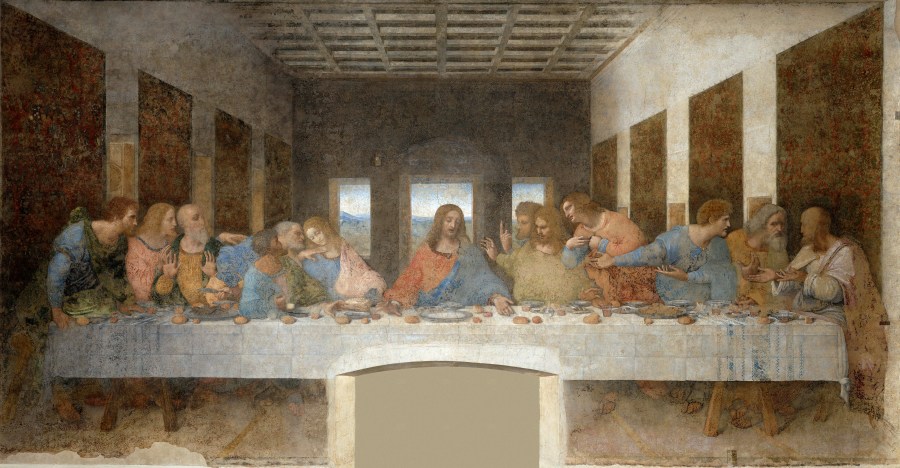
Here’s the thing. I never did anything about Maundy Thursday as a kid. But the Presbyterians do. On Thursday. Not Friday. They reenact the Last Supper. Not the Crucifixion. The Last Supper. Which consisted of thirteen MEN, as any idiot sitting in a pew should know.

So I have celebrated my official entry into this new church by demonstrating to the leadership, in writing, that I am a complete dodo.

If I can’t tell the difference between dinner and a crucifixion, I imagine I won’t be invited to many Lenten Supper events.

Playing Nice with Froggie

I love fairy tales, and they generally make sense to me. I am in love with that liminal space between sleep and the waking world, where everything is possible. More importantly, everything is meaningful.

I read fairy tales with Michael before bed when he lets me. It’s harder to get him to be serious now, at twelve. He interrupts and says annoying Gen Alpha things with no relevant meaning at all, or middle-school boy “jokes.” It hurts my feelings, honestly. He can talk all day about basketball, including phrases like “ball handling,” and never crack a smile. But when the princess is “playing with her ball” by the well…you can imagine the hilarity. For him.

We read “The Frog Prince, or Iron Hans” again recently. The good thing now that he’s older is that he understands more. I expect a certain logic out of these stories, and if I don’t get it, we can talk it over. And I had to admit that “The Frog Prince” left me absolutely cold because it made no sense.

The Princess drops her ball and cries in distress, which moves the Frog in the well to offer to find it for her if she’ll promise to be his friend. She does, and he does, and she blows him off. Runs back to the castle, byeeee. But the next day, Frog shows up at the castle door. He tells the King what the Princess promised him, and he demands that his daughter keep her word. She does, but barely: lets Frog sit by her and eat from her plate, hardly hiding her disgust.

In any other story, this would play out with an obviosly moral bent: she would be punished for her ugliness and the Frog, who of course is actually a Prince, would spurn her. He might forgive her eventually if she’s truly sorry (as King Thrushbeard does with his haughty wife).

But she just gets worse and worse. When it’s time to put the slimy Frog in her pretty bed, she drops all pretension of obedience and throws poor Froggie against a wall. At that point, when she’s been as cruel as she can be, then he turns into a dazzling Prince. She is rewarded for her nasty behavior with a perfect marriage to a gorgeous Prince who, for some reason, does not run screaming from Her Royal Harpiness.

I’ve been listening to Lisa Marchiano’s book The Vital Spark. She discusses the conditioning that urges women to be nice at all costs. Then she brings up “The Frog Prince.” Suddenly, immediately, I got it (and hammered out this blog entry without even stopping to finish her chapter, so if I say something dumb here, don’t blame the brilliant Ms. Marchiano).

The Princess’s worst fault isn’t her unkindness or her breaking her word or her disdain for the nice Frog. That’s what I had wrong. Her sin is emotional dishonesty. She tells the Frog she’s fine with the deal (which, he is careful to stress, is not about her fancy things but about the sharing of her true life) when she is not. She only agrees because she thinks he can’t follow through and make it all the way to the castle. Her father makes her do The Right Thing, but she can’t put her heart into it. Finally, when she splats Frog against the bedroom wall, she shows real passion. That’s what breaks the spell. True fury is better than playing nice, at least with a true companion.

I am not sure whether that’s true. I’m thinking about it.

That emphasis also explains the appearance of Iron Hans/Heinrich at the end. I always thought it was a weird, irrelevant little coda. The Prince’s servant Hans was so traumatized when his master turned into a frog that he had to put iron bands around his heart to keep it from breaking. Now that all has ended well, Hans’s bands are breaking because his heart is so full and happy. Like the Princess, he was bound to the Frog but distraught about the situation (though his pain was from grief, not disgust). To survive, he had to stifle his heart. And now he’s free of that struggle to hide his feelings.

I could probably wedge the whole story into some Freudian thing where the Princess is the Id, the King is the Superego, and the frog is the Ego, transformed by allowing the Id a true range of feelings: acknowledging her Shadow, to get Jungian with it.  Something like that. That does work pretty well. Like the Frog.

In the well? Get it?

I don’t know where Michael gets it from.

In Carnations

High-school football is a big deal in Texas. When I moved here from New York in ninth grade, I was taken completely by surprise by the pep rallies and fundraising and spirit days and general noise about it all. I felt mildly interested but separated from it, like I was watching from behind glass. I was shy and strange, not the kind of girl who got invited to Homecoming, or to anything. No one was buying me a carnation for a dollar before school on Fridays. But that was okay. It was all very festive, and on that first Friday of football season, I bought a carnation for myself. It was pretty and bright red and smelled divine. I carried it around all day like other girls carried theirs, and no one noticed or cared how I had gotten it.

I brought it home on the bus into the huge, newly constructed house, where the light in the big windows stabbed into the rooms so white and strong even in September. I showed my mother this strange artifact. And she said, “Is that for me?” And I said it was. And every Friday of every football season of my high-school life, I brought my mother a carnation.

At the same school, many years later, I taught Hamlet to seniors. Before we started the play itself, I would tell my students this story.

“When I was a kid, my mother was very, very hard to live with. Our relationship was a nightmare. Especially after we moved here from New York, she was lonely and miserable, and it made her sarcastic and mean. She said things no one should ever say to anyone, much less a kid. And she hit me. And I hated her so much that at night I would lie in bed and clench my teeth and knot up every muscle until I shook, just lying there and hating her. And the only way I got through it was to swear to myself every day that the minute I could get out, I would. I would walk out and she would never see me again. I just had to wait it out a little longer, and then I would disappear and be free of her and never think of her again until the day I died.”

My students would be absolutely silent when I said that.

“But it was more complicated than I realized. When I went away to college in Houston, that was a huge relief. My first year, I only even called home every other Tuesday. I loved college, and I hated coming back. But the thing is, the dorm would close for holidays. My scholarship didn’t cover textbooks. I just didn’t have the resources to be on my own. And I couldn’t land a job in Houston before I graduated. So I had to come back. I got a job in Dallas and moved into an apartment, but I still needed my parents’ car. And then I got my own car, but by then…” I’d shrug. “Things had kind of settled down. I could leave the house any time she got too nasty. And there was never any one incident terrible enough to justify blowing up my family. And she eventually did mellow out. Now we hang out all the time. She’s a good mother and a good grandmother. And it’s wonderful.”

Hamlet is largely about vows. I studied it carefully every year I taught it, trying to sort out exactly what it had to say about them. Hamlet himself is disgusted with his own waffling: “O, what a rogue and peasant slave am I!” The ghost of old Hamlet demands justice and specifically wants his son never to rest or think of forgiveness: “Remember me!” and “Do not forget. This visitation / Is to whet thy almost blunted purpose.” To be sure, by the time Hamlet gets his act together and kills Claudius, Claudius clearly and obviously needs killing. So it’s important and desirable to keep these vows. Right?

To take it to its logical extreme, though, look at Fortinbras. He vows to attack Denmark; his uncle dissuades him. So he doesn’t keep his vow…exactly. But, having an army at his disposal and his dander up, he cheerfully agrees to go after Poland instead, because he’s ready to fight and fight he shall! For nothing! For “an eggshell”! And Hamlet says Fortinbras is wonderful “to find quarrel in a straw when honor’s at the stake”! Most importantly of all, Fortinbras is the winner of the whole shebang in the end: he’s as good as crowned, with Hamlet’s blessing. So that shows that he who persists in his violence for honor is virtuous and worthy. Right?

But look at Laertes. Laertes wants to avenge his father “in terms of honor.” But he weakens: “And yet it is almost against my conscience.” And by the time he gets what he so fiercely wanted and pokes Hamlet with the poisoned blade, all he wants is to “exchange forgiveness.” And he literally poisons himself by his hatred. So stubbornly insisting on vengeance is not such a hot idea after all. Right?

After studying and teaching Hamlet for years, all I see is that the whole question of keeping or abandoning vows for vengeance is complicated as hell. If Shakespeare comes down on one side or the other, I can’t tell which.

When we finished the play, my students would ask about my story. “So you’re saying that it’s better to not keep your promises to yourself? Because if you had, you’d be sorry now, right?” I admitted that when they put it that way, as a general principle, I didn’t know. I still don’t.

I know my sister wanted my mother to pay, and she never stopped wanting it. At the very least, she thought Mom should admit to what she had said and done. She tried occasionally over the years (with admirable fortitude, I thought), to confront my mother about our lives together. And Mom would deflect and deny and shake her head in sorrow and astonishment that after all she had done for her, Melissa would imagine and accuse her of such terrible things. My sister seldom walked out and never permanently, but she never forgave my mother, either, and she thought I was pandering and pathetic for trying to let it all go. She may not have been entirely wrong. I bought my mother’s affection with my willingness to forgive. That price was not negligible. It includes a nervous system so tightly wound that I panic if my playful son puts a hand too near my face or touches my head unexpectedly. It includes teeth I’ve ground down to the nerves.

A few years before she died, I told my mother about a vivid dream I had had in high school in which she and I were the same age, and we were best friends. It’s one of the only times I’ve woken up crying. “Why would you cry?” she asked.

I was tactful. “Well, our relationship was pretty rough then. We were having a hard time. And I wanted so much to stay in that dream and get to be your friend.”

“And look at us now!” she said triumphantly. “Look at all the fun we have now!” She was so cheerful. But there was a warning in it, too. Leave the past alone, it said. I will never offer retribution. Take what you have. And I did, and we had wonderful years of deep connection and affection before she died, and I am not sorry for that. I loved her then, and she loved me.

Gjertrud Schnackenburg has a beautiful poem in which “word-roots blossom” and connect carnations, “Christ’s flowers,” to the words nails and flesh. I think of it when I smell carnations, and I think of the flowers I brought my mother on Fridays. Like nails in flesh, offering flowers to this woman I hated so venomously and loved so desperately. Like throwing a barbed hook across the distance, hoping someday it would catch.

Longing, we say, because desire is full
of endless distances. I must have been the same to her.
— Robert Hass, “Meditation at Lagunitas

“What did we learn, Palmer?”

We live to learn, or at least to develop, or at least to experience. That’s my working theory, and it functions pretty well as a guiding principle, whether or not it turns out to be strictly true. The Task is what the hero thinks he’s trying to accomplish, even when the Ultimate Quest is a mystery. It gives him something to point himself at.

A year ago today, my father discovered my sister dead in her bed. Her death is the worst single event I have ever lived through. I am obscenely privileged, and I tend to have what I want and need. I needed her. It made no difference. So that is a thing I have learned: utter catastrophes can and will happen, and without a clear cause. No event is too unlikely or too terrible.

It’s probably not the worst thing that will happen in my life, and whatever the worst thing is, it’s probably beyond my current imagining. Nameless horror lurks much nearer than it used to.

And my experiences of my mother’s death and my sister’s were completely different. Apparently, one catastrophe can’t necessarily teach me how to weather the next, even if they’re nominally similar.

Also, there are worse things than forgetting.

At first I was sure nothing could be worse than forgetting Melissa in any degree. I was determined to keep her image before me every second of my life. I would be a one-person cult, or at least the cult leader. Our temple would be her heartbreaking, abandoned, picked-over home, or maybe a good brunch spot, or the Aldi Aisle of Shame. Our colors would be coral and fuschia. Our flag would be rainbow; our number, 42. Our anthem and opening hymn would be “Welcome to Paradise”; our recessional would be “Chelsea Dagger.” Our priestly garb would be the patterned sleeveless dress and flip-flops. We’d heap the altar with mountain laurel. I could go on. I did go on, clinging to every artifact and every symbol. I lost myself in every photo of her face and was astounded — I still am, honestly — at how that face is etched into my eyes. These last few years, objectively and literally, I looked at her face more than my own. It’s like a part of my own body. Her face is as familiar as my own two hands, even now.

And I was in Hell. There was an initial period when I reread light fiction series for days on end, just trying to keep breathing. But then I got down to the serious business of never forgetting a single thing, and I devoted myself to keeping her alive somehow, and I was in Hell. I did the math. By my initial estimates, no amount of grief was worth forgetting her. I would prove my love by making that trade. I would buy memory with pain. I tried to. But eventually, that calculus changed, because I had underestimated how much I was capable of suffering. I didn’t know anything could hurt like that and keep on hurting.

Of course, I still think of her during most hours of every day, as I did when she was alive. But I don’t demand anymore that every time I get to the end of that sad mental rosary, I start over from the beginning without a breath. It doesn’t matter the way I thought it would. No amount of trying will bring her back to me. She cannot be reconstructed from memory. And no amount of pious self-flagellation can keep the treadmill going indefinitely. Some things will be forgotten. A year ago, six months ago, that would have been anathema. I raged. But I don’t set my heels against it now, not like that. You can call that learning or just exhaustion.

I learned, very much to my surprise, that suffering connects people, and not just the people who are doing the suffering. In Inside Out, Joy realizes that help comes because of Sadness. I didn’t know I was looking for help, and I never would have believed that anything could help at all.

But I cried out anyhow. Mostly it was an instinct born of panic. Surely if I felt like this, the earth was collapsing. The world was ending. The tribe must be warned! Protect the children! Every time I got on Facebook, it felt sort of like screaming in the middle of the street, like an alarm.

I never used to write, “Sorry for your loss” after fifty people had written it before me. I just didn’t see how it could matter. It wasn’t original, and it wasn’t informative, and I was not an important player in someone else’s moment of crisis, so wasn’t it almost egotistical to insert myself? My being sorry, no matter how sorry I was, couldn’t make even a dent in other people’s pain. But then all these people wrote, over and over, about how sorry they were for my loss. And it was so moving, and so unexpectedly beautiful. And whether they said so or not, every single person who had known Melissa was sorry in a slightly different way, having lost some slightly different facet of her. And every person who hadn’t known her but knew me was wishing me well with some slightly different inflection, just by being another person. My best friend traveled to be with me. Friends I haven’t seen for years saw what I wrote and acknowledged my hurt and I’ve been wrong my whole life, because it matters so much. It’s not something I could explain to the person I was before all this. I think it’s something most people know, that kindness can matter like that. I didn’t know it, but I know it now.

Part of learning about other people’s kindness was learning this: my own suffering pries open my heart. I’m not thrilled to find that out. I consider the opening of my heart an important Task, maybe even the real Quest. But I really, really would prefer to do it on my own terms, maybe by taking up yoga and cuddling babies. But if I’m realistic, I have to say that historically, it’s suffering that’s done the trick. When I was at my lowest this past year, I just loved other people better and more, and I mean all people. My dad, my niece and nephew, but also grocery clerks and casual friends. I hugged more and talked less guardedly and worried less after the fact about what I had said wrong. I wasn’t exactly saintly or anything, but I did care more than usual about others’ suffering while worrying less about protecting myself from their mess. I wished for others’ happiness with more intensity and less jealousy. The implications for my spiritual development are deeply uncomfortable. I don’t want the universe to get any more ideas about helping me with this.

Ow.

I learned that when someone disappears from the world, the blast radius can somehow be both vast and tiny. A personal tsunami, a cataclysm, can be barely a ripple in the probate court, the car dealership, the HR department, the lawn service. So many people’s lives were diminished — or practically demolished — the day Melissa died; somehow, though, it was business as usual for the water company, the coroner, OKCupid, and the U.S. Postal Service. The cognitive dissonance continues to rattle me.

For those of you interested in the Other Side side of things, I learned much to my disappointment that, again, my dead mother and my dead sister have little to do with each other as far as my experience. I continue to feel my mother around me, but as constantly as I think of Melissa (to whom I was arguably much closer), I seldom feel like she’s very near. Possibly she’s not too good at this after-death communication business: as an atheist, she never seriously entertained the idea before, not that I know of. More likely, I’m sad and she’s not and that’s creating interference. I did see my favorite medium (so? I’m a nut job and a rube. So what. Love me anyhow) who managed to communicate references to both the dryer (presumably the one I was running when I heard from her at her house last fall) and sloths, which were absolutely a thing with us. But the way it was presented was so tangled, I didn’t even get it until later. I’m on my own for the moment (though if you’re interested, I’ll write later about the Girl Scout Cookies, which was a nice trick).

This post is too sad. Everyone likes a sloth.

I learned the name of a good lawyer.

I learned that saying, “I am sad” to another person often feels just a little less awful than saying it to nobody. And writing on Melissa’s Facebook wall feels less bad than wanting to but restraining myself.

I learned that my niece and nephew are more resilient than might have been expected, and that I truly do love them. They weren’t just accessories to my love for my sister. No matter what happens or how they’re raised or where they go, they are mine to love.

Oh, here’s a weird one. I learned that I am lovable. Not in some profound existential way, but in the silly quotidian ways I love and miss my sister. I miss her (more) when I come across Highland cows or Memoirs of a Geisha or Uno or Tajin or baby owls or Larry the Cucumber. And one day I will be dead, and no matter how much I wish they did not have to suffer, my loved ones will miss me. It can’t be helped. I’ve wormed my way into their lives and I can’t be painlessly extracted. They will think of me when they hear chickadees or cook scrambled eggs or smell Jour d’Hermès, or, hell, maybe read this blog. Maybe especially then.

This morning someone knocked on my bedroom door and I sang, “Whoooo iiiis iiiit?” the way Egghead and Shively do. And I held my breath, crazily hoping for some miracle that would make the answer, “Mailman Fred!” And then I’d say, “Mailman Fred! Mailman Fred!” and do the Egghead and Shively puppet dance and open the door, and then my life would be put back together.

CIA Superior : What did we learn, Palmer?
CIA Officer : I don’t know, sir.
CIA Superior : I don’t fuckin’ know either. I guess we learned not to do it again.
CIA Officer : Yes, sir.
CIA Superior : I’m fucked if I know what we did.
CIA Officer : Yes, sir, it’s, uh, hard to say.
CIA Superior : Jesus Fucking Christ.

Burn After Reading (2008)

Amen.

Household Deities

Following up on the “Days” phenomenon reminded me of another occasion where my dead mother somehow pulled some strings and convinced an innocent stranger to aid her in her hocus-pocus. Last time, I had an anonymous poster of song data to thank; this time it was, I suppose, a Fitz & Floyd warehouse worker hassled by rush holiday orders.

You have to understand my mother’s relationship with Christmas artifacts.

When my Catholic mother first proposed to wed my Jewish father in the early 1970s, her local Catholic Church authorities were less than supportive. She did not get a church wedding, and she seldom entered a church after that, though she did enroll me and Melissa in CCD classes. Dad took us. After we moved to Texas in 1988, our new Catholic church was kind of stoked about having its very own Jew. I don’t know if they had ever seen one before.

My theory is that, disenchanted with the traditional Christian godhead, she spent the rest of her life worshipping a personal God cobbled together from her favorite mythical or near-mythical male figures: her great-great grandfather Patrick Balfe, her grandfather, and Santa Claus.

The conflation of those last two is understandable. When her father broke the news about Santa Claus to my mother’s older sister, my mom found out, too. At five years old, she was not ready, and her heart was broken.

That same year, her grandfather died. She would wait on the back steps for him to come get her every Thursday, and they would go for ice cream, just the two of them. But while she was waiting one evening, the news of her grandfather’s death came to the house. No one thought to go and find Patti, waiting on the steps. She waited for hours. Her grandpa always came for her on Thursdays.

Patrick Balfe is the family patriarch, who sailed from Ireland to New York and opened a bakery in the Five Points before moving the family business to Brooklyn. Once my mom’s genealogy obsession unearthed his documents and his photo, she embraced him enthusiastically. His portrait hangs over my parents’ mantel, complete with shillelagh just barely visible in the corner.

Grainy black and white photo of Patrick Balfe
Admit it. Homeboy was totes adorbs.

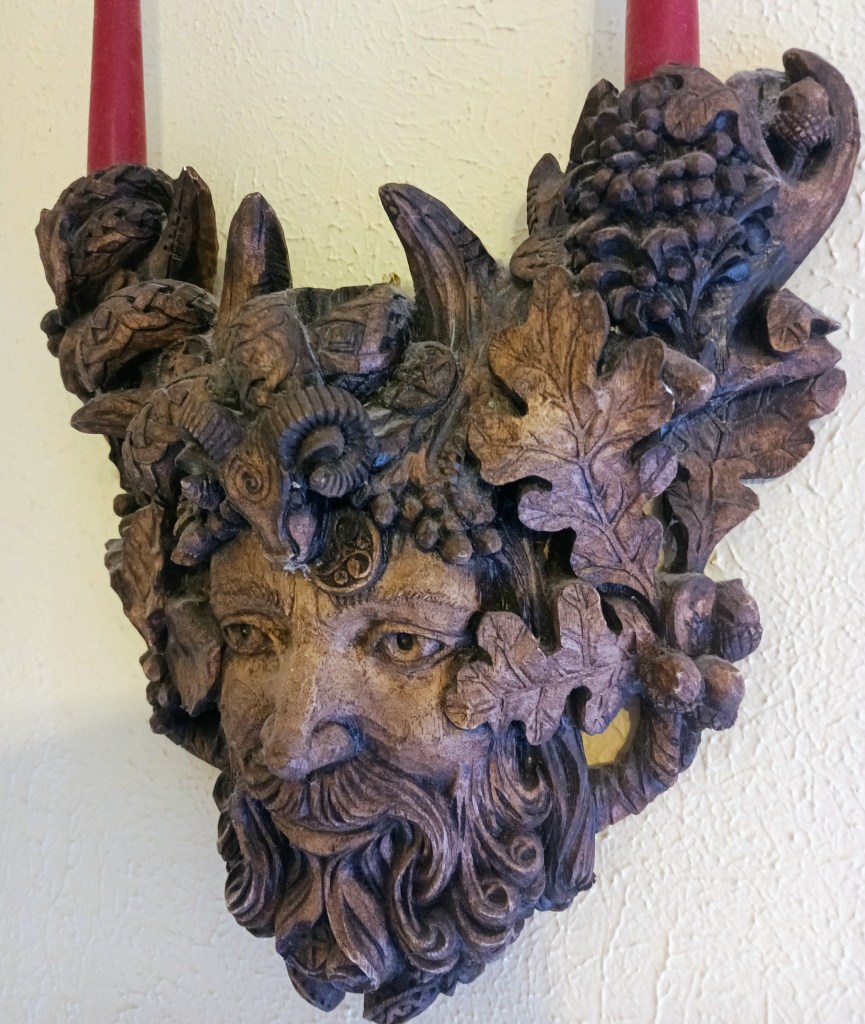
The fourth personification of the male principle she was worshipping, now that I think about it, was the Green Man. She was wary of anything that looked like ritualized magic, which raised her Catholic hackles—she didn’t even like my playing Dungeons & Dragons (as an adult!)—but she adored all manifestations of the Green Man. We saw him everywhere, and we considered him a personal friend.

Because we so loved the Green Man, I bought a beautiful carved wall sconce of the associated god Cernunnos from Paul Borda at an Irish festival many years ago. As he wrapped it, he told me the story of the Oak King and the Holly King, and he handed me the heavy package and looked me in the eyes and said seriously, “He’ll take good care of you.”

Later I also bought the female counterpart of the piece, but it was mostly out of guilt—I had been reading up on Wicca and feared I was unwisely neglecting the female principle. Both heads hang in my bedroom now, but I never felt the same attraction to her. She’s beautiful, but he’s the one I can see from my bed. I’ve inherited my mother’s (unfair and probably not even healthy) reflexive affinity with the masculine.

"Forest Lord Cernunnos" wall sconce
Also totes adorbs.

Mom’s worship of Santa Claus eventually took the form of obsessive cross-stitch. She was fiercely ambitious and exacting. That made her a difficult mother, but it resulted in twenty or so of the most beautiful and complex cross-stitch works I’ve ever seen, growing steadily more dazzling even as her arthritis progressed. And the idea of Santa Claus as a kind of patron saint grew and became almost separate from Christmas (naturally—what’s the use of a God who comes out only once a year?).

For one thing, the complexity of her cross-stitch projects required her to start them in March if she cared to have them finished by December, so their production was on a constant rolling schedule independent of the seasons. And their display stopped being seasonal, too, especially as she got interested in less and less standard-looking Santas. She liked Santas in blue or green, or in fur coats. They didn’t have to be fat, or jolly, or even smiling, but they did have to have kindly faces. That was very important.

Detailed cross-stitch of a Santa figure in a blue hood with holly garland and two rabbits
This is about twice as much forest god as it is Jolly Old St. Nicholas.

So the symbols of Christmas were the important thing, and honestly, they were what we truly worshipped every year. Mom wanted nothing to do with Jesus or religion, but she wanted the beautiful things that Christmas occasioned. Her highest compliment for a thing was that it was “special”: handmade, or hard to come by, or rightfully expensive. She loved the things that shine.

When I was in my twenties, we visited a Fitz & Floyd outlet store near my house to see what was special there. Oh, did my mother love that Fitz & Floyd ceramic glaze! It was very special: both expensive and shiny. When we found an entire Fitz & Floyd nativity in the outlet store, she couldn’t believe our luck. She had already given me my great-grandmother’s little carved nativity, so I didn’t feel I needed another one, but that old thing looked like nothing next to these figures: large, elaborately decorated, colorful, gilded, glowing with that signature pearly sheen.

She couldn’t stand to see me pass it up, so she and Dad bought it for me on the spot: Joseph, Mary, Jesus-manger-lamb (all one piece), three Wise Persons, donkey, cow, creche. All the basics covered. She tried in later years to convince me to buy the remaining pieces, but they were so expensive. What would I even do with all those camels on their spindly breakable legs?

Of course I was thinking of my mother that first year after she died, pulling my exquisite creche out in late November with all its cheerful red boxes of figures nestled in Styrofoam. And I thought perhaps I’d get myself a little present from the Fitz & Floyd Web site (the outlet store had closed long ago): I could spring for one camel, the one lying down so I wouldn’t worry so much about breaking the legs off. And there was a cute salt-and-pepper set that looked like chickens. It was on clearance for five bucks; I bought that too.

Partly, I settled on the camel because Mom had specifically urged me to buy one a few years before. Really special things aren’t available forever. So was it really my idea to place this order? I certainly thought it was. I will admit every time that I don’t know the first thing about how it all happens. I only know it happens.

When the box arrived, it seemed overly large for two smallish items. When I opened it, I found the box for the camel; the box for the little chickens; and a third, large box, about fifteen inches square, that was utterly unrelated to anything I had ever purchased, looked at, or thought about.

Box for Fitz & Floyd "Renaissance Holiday Serving Bowl"
Love, Santa.

This box was not on the shipping list or the receipt. It had somehow slipped in unnoticed, even though it was easily five times the size of anything I had actually purchased.

It wasn’t only that it was such an unlikely surprise. It was so obviously from my mother—even my sister, who thought Dad and I were delusional, had to admit it was exactly Mom’s taste. It was so clearly what she would have bought me. It was gilded, shiny, elaborate, eye-catching, and unmistakably special.

You could reasonably say, in fact, that it’s a bit much. But it’s not like I put it out every day. For everyday use, I have my mother’s spirit and her carved and cross-stitched gods, their kindly faces in every room.

I find letters from God drop’t in the street, and every one is sign’d by God’s name,
And I leave them where they are, for I know that wheresoe’er I go,
Others will punctually come for ever and ever.

Walt Whitman, “Leaves of Grass”

The Statue of St. Fiacre

As promised long ago, here is another story of Adventures with Dead People.

In August of 2016, I was buying some plants for my classroom. I passed up the Calloway’s closer to the school and went to Ruibal’s. The plants could be pricey, but my mother was a certified Master Gardener, and she said they were excellent. This was back when my mother was alive and could say stuff like that directly.

I’m really straining here to slip in some details you need to know without ruining the story, but I don’t know how to do it. I’m just going to have to lay it out.

  • My grandmother Jean, my mother’s mother, had died almost a year before.
    • Not strictly relevant but entertaining in its way: my grandmother famously had a “black thumb.” Presumably, my mother’s talent with plants came from my great-grandfather, who grew “dinner-plate dahlias.” My grandmother could kill a plant just by looking at it cross-eyed.
  • St. Fiacre is the Irish patron saint of gardeners (also of sufferers of venereal disease, fistulas, and hemorrhoids, but you’ll be pleased to learn that those appear in this story not at all).
    • I knew who St. Fiacre was because my mother had long searched for a St. Fiacre garden statue. No, St. Francis would not do. And yeah, the Interwebs have All The Things, but the cost of shipping a garden statue is shocking.
  • My grandmother loved Gerber daisies. They were her favorites and everyone knew that. To this day, Dad plants them by his front door for her.

I picked up a few nice, murder-resistant, green classroom plants (sansevieria, pothos, some other leafy guys, no flowers) and then felt a pull toward a corner full of huge flowerpots. I did not need or want a huge flowerpot, so I thought, Nah, and then I thought, But then again… Oh, I wish I could explain how ordinary it is when it happens! It’s not weird. It’s not like being possessed (I assume, having been free of demons to date). It’s just a very compelling argument in my own head.

Side story: the purpose of such compulsions does not always even become clear. I was driving home from somewhere once and got close to a Barnes & Noble I liked. Now, it doesn’t take much to get me into a bookstore; it’s getting me out that presents the challenge. But this particular day, I was done with my errand and I really had to use the restroom. So I thought, no, I’ll just go home.

Barnes & Noble has a bathroom.

I know. But I could also just go home.

BUT YOU COULD ALSO GO TO BARNES & NOBLE.

We (I still don’t know who or what was the other party on the line) went around like this a few times. At one point I moved the wheel to change lanes and then said aloud, “No, okay then, I guess not,” and got back in the right lane and turned in to the parking lot, because apparently that’s what we were doing today.

I did the standard “shopping with dead people” bit: wander, keep an open mind, pick things up and put them down. Once I had used the restroom, I felt nothing compelling at all. Frustrated and feeling a little crazy, I left.

In the parking lot was the green Saturn sedan belonging to my ex-husband, Jason. Not just a similar one, but clearly his car, with the CELEBRATE DIVERSITY sticker intact. He had been in the store with me. In fact, unknown to me at the time, he was working there. But I hadn’t noticed him, and I had no idea what I should have done about it if I had.

I stood and stared at the car for a minute. Then I left. And I never figured out what the point of that whole thing could have been. Maybe it wasn’t about me at all; maybe he needed to see me for some reason. But I never spoke to him again, and after some years he died quite suddenly.

And yes, in fact, I did hear from him after he died, which was especially interesting because he was an atheist. His grandmother, a sweet-tempered and deeply devout Christian, is one of the few people who’s ever visited me in a dream, and I assume it’s because Jason himself simply did not truck with that nonsense. I remember only that the dream had snow in it, and that at the end, I didn’t want her to leave, so she started to…materialize, I guess. And at that moment I learned I did not ever want to see a real ghost. Ever. And thankfully, I haven’t yet, and I hope I never do because I’d be terrified.

Jason never would have been so overt—even in life he was so unassuming—so he sent me one of those “coincidences” that will never convince the unconverted but work quite nicely for me. The morning after I learned of his death, I heard a song by Throwing Muses, a band he had loved that I’ve hardly ever heard on the radio. I said aloud, “You have my attention.” The next one was Tori Amos’s “Cornflake Girl,” another deep cut from an artist he liked. “Okay,” I said. “If the next song is by Natalie Merchant, I’ll know it’s you.” And damnit, it wasn’t Natalie Merchant…exactly. It was 10,000 Maniacs, which is the band she was in before she went solo. Close enough, says I. I was moved, and a little awed, and grateful.

But why couldn’t he have just opted for one of her solo hits? There were plenty. And why “Cherry Tree”? It’s about illiteracy, of all things. And of all the Tori Amos songs he’d put on my mix tapes, “Cornflake Girl” had never appeared. It always goes like this. Some part of the experience is always not quite cooked to order.

I am quick to acknowledge that such a discrepancy between the request and the result could occur because it’s all coincidence and none of it means anything! That’s a very respectable and defensible point. You’ll never embarrass yourself in polite society with a stance like that. You’ll always win that argument. But this story is maybe not for you.

By that August, I had had a few of these experiences, enough to recognize the wordless pull of Psst! Over here! I did not need a huge flower pot. But I rolled my cart into the corner anyhow…and a door opened. I had never noticed a door in that corner of the greenhouse. I went through it, and to my left were large concrete garden statues. I knew Fiacre would be there. I recognized him immediately by his spade, but I checked the tag to be sure. Two hundred bucks was steep, but I knew my family had to have him. I lugged him up into the seat of the cart.

In those days, Ruibal’s had a little food market, and I had been planning to pick up a few groceries. But before I could get there, I was beset by courteous employees who wanted to help me get my cart to the checkout. I saw their point. St. Fiacre was heavy and two feet tall and cumbersome and leaning dangerously out of his seat. I let them take the cart and trotted behind. As we swept through the market, I grabbed a loaf of bread from a display and chucked it onto the checkout belt: at least I could check that off the list.

And St. Fiacre was on sale! Score! After I got in the car, I looked at the receipt to see how much I had saved on my discounted saint. The first three items on the receipt were “St. Fiacre” and “Grandma’s Perfect White Bread” and “Gerber Daisy.”

I had not bought any Gerber daisies.

Fear not: I’m pretty sure the imaginary Gerbers weren’t more expensive than what I actually got. In my experience, the Dead Relatives are pretty budget-conscious. As you will see.

I was dying to talk this over with my mother, but my parents were out. Finally, I left St. Fiacre by the back fence where they’d see him right away when they got home. Mom said later that even though she wasn’t wearing her glasses (and her eyesight was terrible), as soon as they turned into the alley, she said, “Oh, that must be St. Fiacre,” as if she had been expecting him any day. When I spoke with her that night, she offered to pay me back. I said not to worry about it.

A few weeks later, I was visiting my parents, and Mom approached me with some cash in her hand and the oddest look on her face: a little hesitant, a little dazed. She explained haltingly that actually, it was my grandmother who had been looking for the St. Fiacre to begin with. She’d wanted it as a gift for my dad, who had taken up gardening in the last few years. She’d told my mother to buy it if she ever found one, and my grandmother would pay her back.

“But you don’t have to pay me back, it’s fine,” I assured her.

“Well…I’m not. She is. I’ve been keeping blankets in the bureau I got from her house. I’ve been using those drawers for a year and never saw anything. But today the corner of the drawer liner was folded up, and this was under it. So I think this is yours.” She handed me two hundred-dollar bills: the original price of the St. Fiacre.

I keep wanting to explain that I am not insane or stupid. I know how probability works, more or less. I live with garden-variety coincidence every day of my life and don’t get hung up on it. I can’t prove anything or convince anyone, and I promise I’ll never try because that would be crazy. It’s not the things that happen. It’s the way they feel when they do.

I’ve been sad lately, and agitation seems to cause static in my reception. So it’s been quiet in my little World of Woo-woo. But last week I went out for a walk for the first time in a while. I wondered what it might be like to feel my mother’s spirit so surely that she could tell me where to turn. Not that it mattered where I walked, but just to feel her, to be less lonely. And I got the urge to cross the street at a random point. I didn’t credit the idea with any particular importance. Then again, what would it hurt to just go with it? Why not? It was late at night. No cars, little light. As I crossed, I said in my head, I hope you know that normal people call this mental illness. Now I was on the other side of the street. Looked pretty much the same. But now I was close enough to see a mailbox that stood in shadow; I almost walked past it before I turned around. It was decorated with astonishingly realistic butterflies: one of my mother’s many sigils (probably the most conventional one in a long list that includes carousel horses and Jackson’s chameleons). It was beautiful. It didn’t change my fate or anything. But I got to see it because I crossed the street. That’s all. It’s like that.

Thanatopsis

I have been dreading writing this. It’s not going to be wise or funny or clever, and it definitely won’t make me look good. I’m only doing it because I think I have to. Some people say life is learning. In my life, that means reading things I wrote before and learning to be mortified.

Richard Bach, New Age spiritual big shot and author of Jonathan Livingston Seagull, fell in love with actor Leslie Parrish in the 1970s, as described in The Bridge Across Forever. And it wasn’t just love. It was a holy occasion of spiritual reunification. He had dreamed of her, he had loved her in previous lives, they had out-of-body experiences together. They gave workshops on what it meant to find a soulmate. They were cosmically, existentially it.

Which is why people had a few questions when they got divorced. The divorce itself was apparently amicable, the details pedestrian. They grew apart, wanted different things, would still be friends. It wasn’t newsworthy except, hey, wait a minute, didn’t you two have some sort of eternal metaphysical bond happening? So some years ago, Richard Bach took to the Interwebs and briefly explained the perfectly ordinary end of their marriage. And he acknowledged that he had said a lot of things previously about forever and eternity and all that jazz. And he said something like, I should have added one thing: maybe I’m wrong about all of this.

I don’t think he was wrong about it, not exactly. He was just wrong about what it meant, how it would play out in their experience. Maybe they were cosmically bonded–but they still had to suffer the earthy, dirty reality that marriages end.

Before my mother died, she and I had experiences with The Dead Relatives. And sometimes they were so compelling that I would think, “This is it. This is all the proof I could want. I will never doubt the reality of a spiritual afterlife again.” But both Mom and I noticed that over time, the glow would fade and the story would get scrambled in our memories. We’d tell each other the stories to remind ourselves. One of the last things she said to me was, “We have to write down all the stories so they don’t get lost.” She died. On the whole, the stories did not get written.

But then she gave me the best story of all, the one I wrote about. And it isn’t that I doubt it now. It happened just as I said. I believe that my beloved dead are not gone and that they are with me. I can’t doubt it.

But I was naive about what that meant. I thought it meant I didn’t have to miss my mother—and it’s true that I mourned her far less than you’d expect because I felt her so near me. It was even a bit exciting sometimes, like having a friend with a backstage pass. And I thought, “How amazing life will be now that death is nothing to fear.” I’m really embarrassed about that, which is why I’m writing now. It was hubris to the highest, filthiest degree. I thought I was off the hook of being human.

In late June, my sister was supposed to be on a business trip. My father came over to feed the cat and found her body in her bed. He cried, “I thought your mother would take care of her.” I’ve given it a lot of thought since then, and maybe Mom was taking care of her, somehow. Maybe the other options were worse. The cause of death is unknown as of this writing, but maybe a sudden death was a better deal than whatever slow torture was waiting for her. I don’t know. I try not to believe in cosmic error, but it’s hard. She left two small children with her ex-husband and no explanation for any of us.

The day before Melissa died, we spent the day together doing very ordinary things: we went to a furniture store, got coffee, looked for wallpaper, ate pizza. There was no warning. The Relatives were silent. My mother said nothing I was aware of. The whole day, I thought I smelled flowers—not perfume, but real flowers, and it didn’t seem to belong to either her or me, but it followed us everywhere we went that day. If that was some sort of sign, it was the only one we got.

And what I want to acknowledge is that I was a goddamn fool. Knowing what I think I know, it has not saved me. I know Melissa is somewhere because everyone is somewhere, and I know she’s okay because ultimately, cosmically, everyone’s eventually okay, right? I don’t believe in Hell, and I don’t believe her atheism is going to get her bounced out of any afterlife worth afterliving. But oh, I wish I could reach back in time and smack my own smug little face. What a happy, happy story I had to tell! I thought it wouldn’t hurt so much because of what I know, and maybe that story could keep it from hurting someone else so much, too. I’m telling you I was wrong. She may be okay. I am not.

I don’t want to get into the specifics of who she was, and how special, and how loved. But without her, I am a jagged broken piece. I was Jelly to her Narwhal, Arthur to her Tick. I bet she’d tell me to be my own hero now. Easy for her to say.

I was an entity within a matrix of social structures that have collapsed without her. Three people out of four was still a family, but my father and I alone are lost and barely know what to say to each other. Her children took up as much head space as my own son; now I see them for a few hours every other weekend, and only because I insist on it. Their father, and my father, seem willing to watch the whole extended edifice fall to pieces. Or not even watch it. Just turn around and find it gone, like Melissa herself.

My sister had dependent children and no will and owned a house. It’s a mess. Apparently we’re just waiting for an agent of the probate court to come change the locks. In the meantime, my father visits every day. Sometimes I do, too, but it hurts me, God, it hurts me everywhere I can feel pain. This is what’s left, the exoskeleton of the life she chose for herself and her children (and she and I chose many aspects of that life together). And I go there and sit on the orange couch among the pictures of cows and llamas and her children, and I think I can feel her but it’s just because the interrupted remnants of her personality are still humming all around me. The last time I was there, my heart felt so big and I stood in the living room and called, “I love you! I love you! Melly, I love you so much! I love you. I love you.”

About three weeks after she died, I went there to pick up some clothes for the children. I washed and dried them, and as I sat on the couch and listened to the dryer, I fell into a sort of meditative trance. And I want so much to tell you that she was there, that she spoke to me, that I was comforted. But it’s almost worse. I think she spoke to me and it was a freaking fiasco.

I thought practicing with my mother had suited me for spirit communication, so maybe this was just mental illness. It started there while I was still in the house and continued the whole time I was visiting her children. I can barely begin to describe how strange it was. My mother speaks in urges—turn here, pick that up, look over there. My sister, it seems, speaks in images and static. It was like having someone else’s memories or dreams, without words or context. It went on for hours, distractingly, and I couldn’t make any sense of it. It was as if everything I thought reminded me of something else…but the something else didn’t actually belong to me, and then it seemed like the original thought didn’t either. That’s the best I can explain it.

Finally I took a nap, hoping to get something a little more direct. Before I fell asleep I jotted descriptions of three images that emerged from the mess. One was the pink Troll doll from the movie, but I haven’t seen it, so that was no help. The second was the face of the Beast from Beauty and the Beast, one of Melissa’s favorite movies, in that moment right after he transforms into a man, that expression of confused wonder. And the third was a character from Inside Out, which she and I saw together and loved. It was Joy.

I hope it was her. And I hope it means good things. When I woke up, whatever had been in my head was gone, and it has not come back in all this time.

If nothing else, I thought a firm belief in life after death would make me less afraid of my own death. It has not. I am so aware now of the way a life can just end. Bam. I play a morbid little game now, the “not-dead” game. I see an ancient street person pushing a grocery cart. Dave says she’s been living on that corner for years, and I imagine how hard that is and say, “Yet she is not dead.” In the news, someone is stabbed multiple times—yet he is not dead. My friend had a stroke and, between CT scans, resigned herself to her death–yet she is not dead. Somehow, whatever happened to my sister’s body was so terrible that she actually died, all the way, permanently. With all these people walking around not dead, I can’t begin to imagine what happened to her in her own bed that could be that devastating. But whatever it is, there’s no reason it (or something worse) couldn’t come any time for me, my husband, my son, my friends. I guess I knew that.

The death of my cats changed something in me. From the day we brought our new dog home, I’ve been aware every time I touch her that there is a death waiting inside her. But now I feel like that about people, too. And I’ll say it again: knowing that death isn’t the end doesn’t help the way I thought it would. I want this life, here, the one I’ve built for myself, with these people who would cry if I disappeared. I want this man, this boy, this dog, this garden. And I want my sister.

The story of my mother may have been naive and overly chirpy, but at least it was optimistic. The story of heartbreak is old and unsurprising, but it’s the one I have at the moment. I hope I can come back and offer a better one, I really do.

“All the new thinking is about loss.
In this it resembles all the old thinking.”

Robert Hass, “Meditations at Lagunitas”
Turkey Recipe (with personal notes)

What a strange feeling. I just looked up my turkey recipe from last year, and apparently I was feeling a bit flippant. So I left this goofy recipe for myself to find and enjoy this year. Thanks, last-year me!

Obviously I was deeply influenced by Albert Berneko’s pot roast “recipe,” which is one of my favorite pieces of writing ever, period. So read mine first. Nothing I write can follow this. https://deadspin.com/how-to-cook-a-pot-roast-a-guide-for-people-who-want-to-5970682

But mine does have the distinction of being my honest-to-God actual recipe that I am going to use to cook an actual turkey. So all those little warnings and admonitions? They’re in deadly earnest. From me to me. And now to you.

Check out this recipe for “Turkey, Brined and Roasted” in Plan To Eat. https://www.plantoeat.com/recipes/30653094

You want WHAT, now?

Michael’s almost nine, and now he has opinions about what he wears, though like his parents he opts for comfort over style every time. Yesterday, he was putting on shoes and socks for a walk.

“I only want the dickless ones from now on.”

Surely, surely we had misheard. But no, there it was again.

“The dickless ones are my favorite.”

“Um, your favorite what, buddy?”

“Socks. The dickless kind. Dick-less,” he repeated firmly.

I was stumped. He obviously didn’t think he was saying anything noteworthy. Just a little small talk. Nice evening, pleasant weather for a walk, love those dickless socks.

I will spare you the ensuing ten-minute convo, in which the word “dickless” was carefully enunciated numerous times for my benefit, since I was obviously losing my hearing in my old age.

“You wear them, too! Don’t you remember when you gave me the dickless socks? Like these?” he said finally.

Ah! Yes. Yes, I do. They are nice socks. From DICKIES. Dickies, like the pants. The name is on the toe, so yeah, I guess the difference between i and l is less than obvious, printed on fuzz as it is.

So that’s our endorsement. When you buy socks, now you know which ones you want. Don’t settle for less.

Lower-key Quotidian Hauntings

Note: This was written before the most recent post, about the margarita glasses. So they’re out of order.

When I was in high school, my mother used to joke that she could devastate my social life in less than five minutes. The cafeteria was open to the front entry hall of the school, so all she’d have to do was walk in and wave a pink Barbie lunch box, screeching, “Meggieeeee! You forgot your lunchieeees!” And that would be that. Over the years, the threatened prank got more and more elaborate: an unlit cigarette, a shower cap, curlers, a muumuu, a ratty bathrobe, slippers. And always, the dreaded Barbie lunchbox.

I was walking into a rec center yesterday and feeling just the slightest bit sorry for myself because my mom had her own mother with her through all the feminine mysteries of menopause. I won’t have my mother around for that little miracle of nature. I was pouting about this and washing my hands in the bathroom when another perfect song came on in answer. I just stood and listened.

Oh, I’ve always got the memories
While I’m finding out who I’m gonna be
We might be apart but I hope you always know
You’ll be with me wherever I go

“Wherever I Go,” written by Adam Watts and Andy Dodd

Oh, my heart. I didn’t know the song, but after the confusion with the Kinks’ “Days,” I figured she was giving the singing telegram approach another shot. And I looked forward to having another wonderful story to tell. And then I looked it up, and I knew for sure it was her, and I knew why. The song is “Wherever I Go” by freaking HANNAH MONTANA.

I swear I can hear her giggling. Hannah Montana, Mom? Really? So there it is. Essentially, knowing that I’d write about her, she just told all my friends I love Hannah Montana. But I don’t! I didn’t know the song! I didn’t even like it that much! And I only ever had ONE Barbie, and she wasn’t even blonde!

Obviously, most of my mother’s “greetings” can be put down to coincidence and confirmation bias; she’s not going to send fireworks every day, and she doesn’t have to. Usually, it’s more like today’s “conversation” at Sprouts.

For those who wonder what I’ve been thinking about other than my mother for the past two weeks, the answer is…not much. But she died less than two weeks ago. Gimme a break, here. But I do occasionally have a thought of my own, and I wanted avocados. This has nothing to do with Mom: she doesn’t eat them. I mean, I guess at the moment she doesn’t eat too much of anything (like Polonius, she is at supper, not where she eats but where she is eaten! Actually, she was cremated, but I couldn’t waste that reference), but you know what I mean. She does not find avocados interesting.

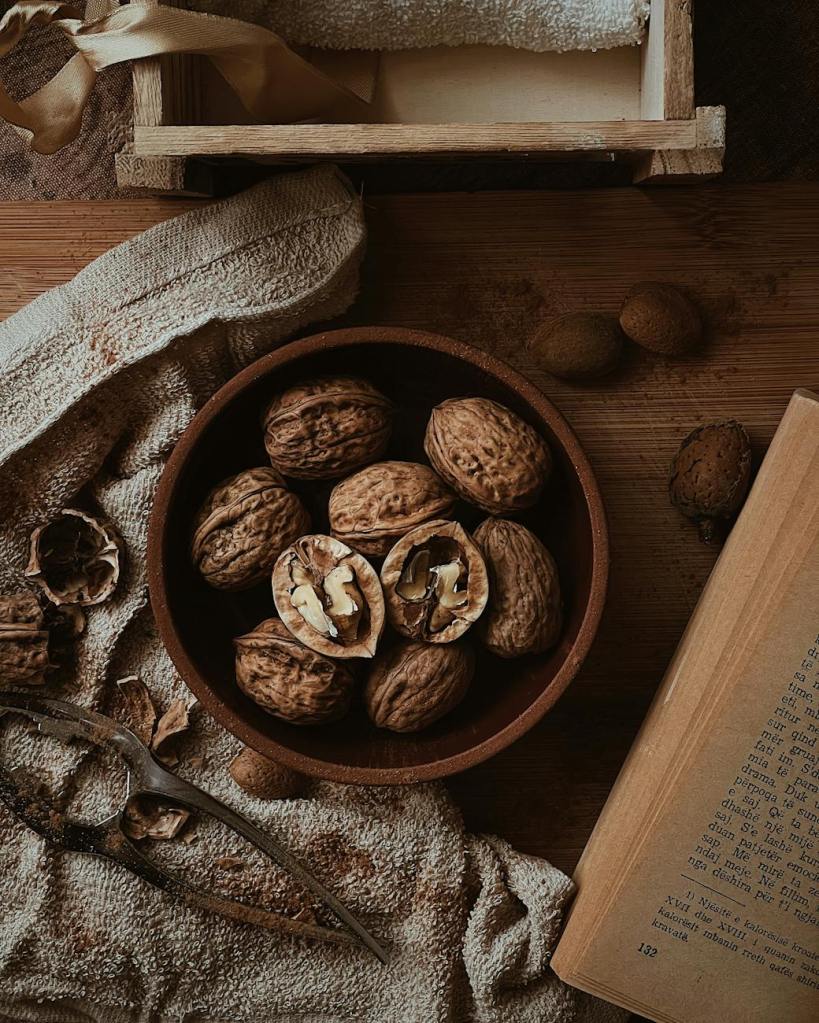
But, typically, she seemed to be interested in some other things, so I roamed. When I saw the bulk bins, I remembered her fondness for Sprouts chocolate-covered walnuts.

Very good for the brain! she enthused. Antioxidants! Yum YUM!

I know, Mom. But honestly, I didn’t like them that much.

But they were so good! I shared, remember?

Yes. Thank you. But that shiny chocolate coating just didn’t taste like anything to me. I’m sorry. It was like shellac.

Oh, just go look.

Which I did. And it is good that my mother knows me. I am not especially attentive to detail or subtlety, so I’m glad she’s not relying on me to be perspicacious. ONE bin had the big red sign I couldn’t miss.

Thanks for the tip, Mom. Subtle as always.

And they were different from the old shellacked walnuts, and they were quite tasty, and yes, I’m sure they’re just jam-packed with antioxidants. I know.

What was notable when I thought about it later was the complete normalcy of it all. If I had texted her a month ago that I was in Sprouts, this is more or less the same conversation we would have had. And I find that deeply, deeply comforting. She keeps telling me, No, whatever it is, you don’t have to do it alone. Menopause is barreling down on me, but I can complain to her anytime about the depletion of collagen in my neck. She’ll sympathize. Not that she has a neck anymore.

I guess I’d better say something about the darkness of the family humor. My mother always had a quirky, not-too-respectful relationship with death. And physical handicaps. And a number of other things that civilized people do not laugh at.

Us crazies who believe our loved ones stay with us forever… Well, on occasion, other folks, like my sister, take exception. And they say, “What about when you’re pinching off a loaf, huh? When you’re dropping a deuce, are all those old dudes dancing on the back of the tank?” Now I don’t know, obviously, but my guess is that yes, in fact, they are. They are admiring your technique, wishing you luck, cheering you on! Who is better qualified than they to assure you that, indeed, everything does come out all right in the end?

I’m guessing Mom would frown at the lowbrow turn this has taken, but also she’d love the absurdity of the whole question, the juxtaposition of the sacred and the profane. We once had collective family hysterics around the dinner table because we started wondering about the Pope’s undergarments. The spiral into madness was swift and enjoyable.

A story from the files: When my mother was in her late teens or early twenties, I guess? she went to the wake and viewing of an elderly great-aunt. And this woman, I’m told, had been blessed in life with enormous bazooms, such that my mother started to wonder how they would close the casket. So there she was, checking out the dead woman’s bosoms from the side of her eye, and she noticed…a change in her figure. And she whispered in astonishment to her Aunt Kathy, “Where are her boobs?” For indeed, they were not in evidence.

And Kathy whispered back matter-of-factly, “They’re in a bag by her feet.” Evidently, my mother was not the only one to anticipate the cup-size-to-casket-size-ratio issue.

And the more Mom coughed and wheezed and tried not to laugh, the more hysterically she giggled, until finally my grandmother threw her out of the funeral home and was most displeased.

My mother, who could be so generous and so compassionate, could also be callous, insensitive, shockingly perverse. She was a conundrum: anything at all could become sacred, but generally nothing was. Plenty of people are still bitterly angry at the memory of how awful she could be.

But as she got older, she changed: for instance, she dialed back the sarcasm noticeably (though not the twisted sense of humor). And I think that, freed of her ego and her body and their onerous exigencies, she’ll change even more. What might she be now, when she has nothing to fear and nothing to protect? I would like to find out who she’s going to be. I hope I will, later if not sooner. I’ll keep you posted.